
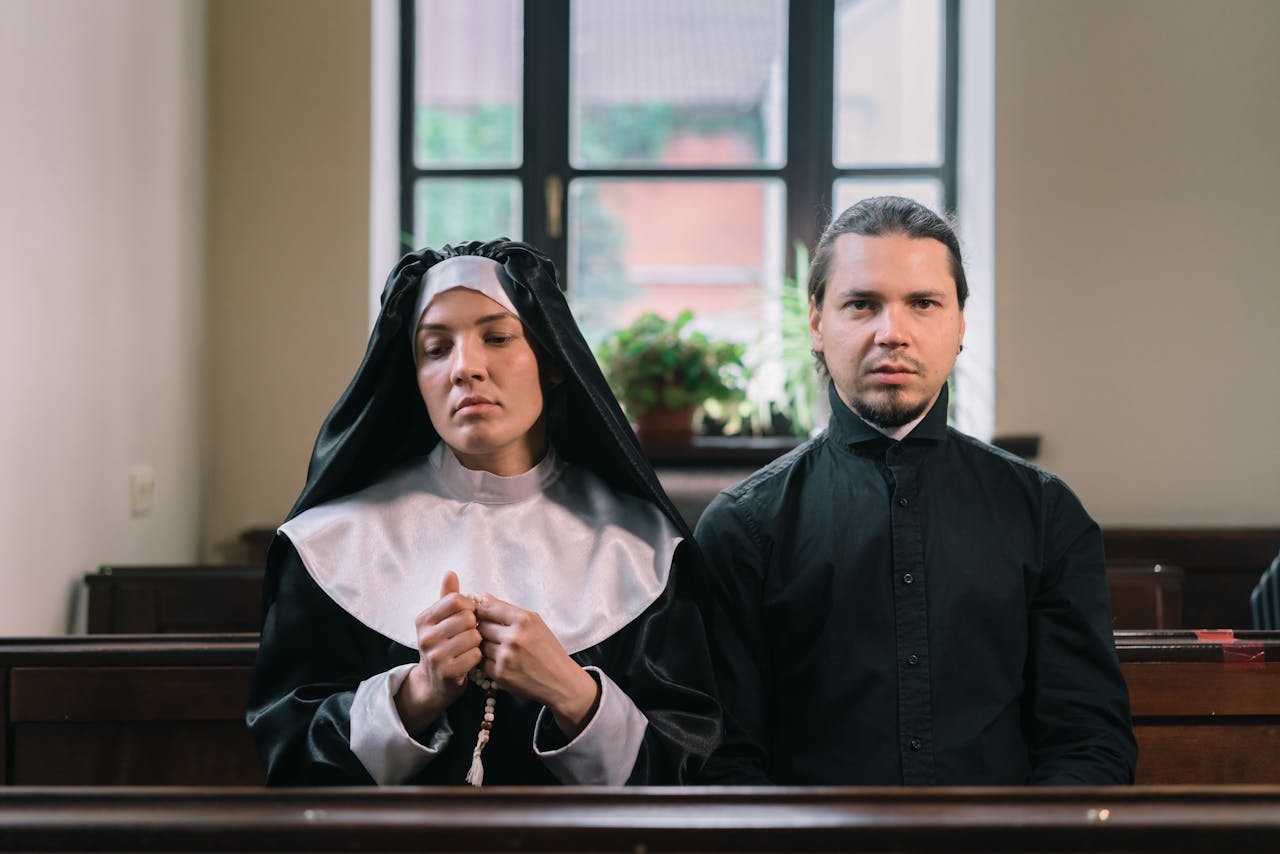
Theological knowledge often operates as a control mechanism. Although believers may not perceive it as such, the process of learning about God’s attributes, memorizing covenant patterns, and anticipating divine behavior constructs a conceptual model that can supplant direct spiritual encounter. The proliferation of AI-generated devotional content in religious media has led believers to engage more with pre-formulated spiritual frameworks than with original texts. This development further expands the divide between conceptual models of God and the experience of the divine. The apophatic tradition identified this issue centuries ago, asserting that the word ‘God’ does not equate to God. Each description constitutes a claim about anticipated behavior; each claim serves as a prediction, and each prediction represents an attempt at constraint. When these constraints fail, such as in the case of unanswered prayer or unexplained suffering, it is not faith itself that collapses, but rather the architecture of expectation constructed from doctrinal teachings and labeled as faith. The actual divine presence was never contained within these constructs.
As soon as you know something, you have already decided how it should act. You might call that decision faith, but it is also a form of control.
No one enters a church planning to control God. People come with the opposite intention: to submit, to show devotion, and to give themselves to something greater.
But notice what knowledge does. Beneath the devotion, quietly and unnoticed, there is an effort to tame the divine. The congregation is unaware of this, which is exactly why it happens.
Knowledge and control are not separate; they are the same act. To know something is to hold it still long enough to describe it, to pin down its behavior, predict what it will do, and reduce its future to outcomes you can prepare for.
Knowing is a form of controlling. Every fact about something is really a claim about what it will do next. This is most powerful and most harmful in religion, because God was never meant to fit inside any description.
The Theology That Became a Lease Agreement
Quick Summary: Scripture builds up over time. As it accumulates, patterns start to form, and these patterns create expectations. A believer’s covenant theology, shaped by real sources, honest effort, and community confirmation, can quietly move from simply describing faith to making predictions. When this happens, prayer can become more like following instructions, and obedience can feel like just meeting the terms of a contract. The apophatic tradition sees this as the main barrier to truly encountering the divine.
People learn scripture. With this knowledge, they list God’s attributes, including omniscient, omnipotent, omnipresent, just, merciful, and faithful.
They study the covenant, believing that obedience brings blessing, sin brings consequences, and prayer brings a response. They listen to the stories of other believers. Over time, the patterns of God’s past actions are memorized and become the lens through which every new experience of God is understood.
This is not a sign of corruption. This is what faithful religious formation looks like. People gather knowledge sincerely, from real sources, and with honest effort.
The problem is subtle and comes later, when the built-up, organized, and community-confirmed quietly shifts from a description to an expectation. At that point, the believer is no longer learning about God. Instead, they hold a model of God, and this model creates predictions that, from the inside, feel just like faith.
A prayer that already expects what God should do is not an act of surrender. It is more like a polite instruction sent upward by someone who has mistaken their theology for a contract.
This contract has terms. God is supposed to heal, provide, be present in suffering, and answer sincere prayers. But over time, as knowledge accumulates, they become a set of predictions about how God should act. It becomes a contract the believer expects God to uphold.
Expectation becomes a form of control. However, the believer does not feel in control. They feel faithful. But feeling faithful and actually controlling are not the same.
When Theological Models Fail: What Actually Collapses in a Crisis of Faith
Quick Summary: Model failure is different from faith failure, and this distinction is important. When prayers seem to go unanswered, or suffering continues, it is usually the way a believer expects God to act that breaks down, not faith itself. John of the Cross describes the dark night of the soul as a time when these comforting ideas are taken away. This experience is meant to strengthen faith, not to show that it has been abandoned.
Sometimes healing does not come, and prayers go unanswered. Suffering arrives without explanation and lasts longer than any theology of redemptive pain can explain. This is often called a crisis of faith, but that name is misleading.
What actually breaks in this moment is not faith, but the version of God built from accumulated, organized, and community-confirmed knowledge, which expectation had treated as binding.
The real God did not fail. The real God was never inside the model.
The Anomalies of the Model
Thomas Kuhn’s description of scientific revolutions follows a pattern similar to what believers experience during a crisis of faith.
Normal science, which Kuhn defines as the period when a paradigm is accepted, works by solving problems within that framework.
When anomalies show up, the paradigm tries to account for them. As more anomalies appear, it becomes harder to fit them in. Eventually, the framework can no longer handle the evidence and, instead of adapting, collapses.
At that point, the old theory is not just updated with new facts.
Instead, a new framework replaces the old one because only it can explain what the old one could not. (Source: Thomas Kuhn, The Structure of Scientific Revolutions, University of Chicago Press, 1962)
A crisis of faith works much like a Kuhnian crisis.
In this case, the theological model acts as the paradigm. Things like unanswered prayers, ongoing suffering, or unexpected divine actions are the anomalies.
The article describes two possible responses: either expand the framework or defend it. These match Kuhn’s two outcomes of paradigm shift or paradigm defense.
According to Kuhn, most scientific communities first try to defend the old paradigm. The shift to a new one usually happens later, under pressure, and often needs a new generation willing to move forward without the comfort of the old system.
Believers go through the same process.
The model is just a map the believer made from everything they learned, but maps cannot make demands on the land itself. The land simply exists. It was there before the map and remains after the map is gone, unconcerned with the lines the mapmaker drew.
The Mechanism
Quick Summary: Knowledge leads to expectation. Expectation becomes a prediction, which is really a claim about what will happen. The Book of Job shows this process clearly. Job’s three friends use their theological knowledge to explain his suffering and conclude that hidden sin must be the cause, thereby supporting their beliefs. God rejects their argument completely and focuses on their assumption. The issue was the method they used, not the answer they found.
Knowledge leads to expectation. Expectation is a prediction. A prediction is a claim about how something will act in the future. That claim is an attempt to control. But if the subject is God, God will not follow those claims. We choose to see this as abandonment, but really it is reality going beyond the version we created.
Job understood this before tradition recognized it. His friends believed that suffering comes from sin. This prediction then is that Job’s suffering must mean hidden sin. The answer must be confession and returning to the covenant.
Their arguments made sense theologically, but each one tried to keep God inside the limits of their knowledge. When God finally spoke, he did not address their theology but their presumption. Who has held the waters in his hand? Who has measured the universe? This speech was not a rebuke of their knowledge, but a challenge to their belief that knowledge and God are the same.
Two Responses to Unanswered Prayer
Quick Summary: When a model fails, people usually respond in one of two ways. Some broaden their perspective, while others try to defend the original model. In the second case, confirmation bias takes over. The mind explains away contradictions by blaming something like a lack of faith or hidden sin in the believer. This way, the model stays intact, but the real God remains out of reach. According to cognitive schema theory, this happens because our existing frameworks tend to absorb new information rather than change to fit it.
Two things tend to happen when God does not behave as the knowledge predicted. The first, and more demanding one, is to conclude that the model was incomplete. That God is larger than what was learned. That the expectation was not faith but a frame, and the frame was the problem.
Take the silence as information about the map’s limits, not as evidence of divine failure. This move requires the believer to release the control they did not know they were holding, to stand before something genuinely unknown, and to call that standing worship rather than abandonment.
The second move is more common and far more destructive over time. We defend the model. In doing so, we find the variable that explains the gap. This could be insufficient faith, unconfessed sin, a lesson God is patiently teaching, or timing that will eventually make sense.
The model absorbs the contradiction by making the believer the problem. The model survives intact, God remains predictable, and the real God goes unmet for another season.
Jean Piaget’s assimilation and accommodation framework clearly describes two ways the mind responds to new information. First, the mind tries to fit the new information into what it already knows. Only after that does it adjust its understanding to fit the new information, and many people never reach this second step (Source: Piaget, The Psychology of Intelligence, 1950).
This second response is not dishonest but stems from a genuine need to keep things coherent. We need it to stop the world from feeling completely uncertain. The mind cannot live in total uncertainty. It builds models just as the body builds bones because structure is needed to stand.
The model is the skeleton, but sometimes people mistake the skeleton for life itself.
Confirmation Bias and the Believing Mind
Quick Summary: Confirmation bias shapes how we handle spiritual experiences that don’t fit our expectations. The brain does not treat anomalies neutrally, but first tries to fit them into what we already believe. In theology, when God does not act as expected, people usually blame themselves before questioning their beliefs. This is not dishonesty. It is simply how our minds work, and it is the main reason theological models often persist even after they no longer fit new experiences. (Source: Festinger, A Theory of Cognitive Dissonance, 1957)
We do not experience things directly. Instead, our minds interpret everything through the beliefs and ideas we already have. This idea comes from cognitive science and is especially true in religious contexts.
When someone’s prayer is not answered, there are usually two ways to explain it. One is that their understanding of how God answers prayer is missing something.
The other is that the person’s own faith, actions, or timing caused the problem. Confirmation bias makes people more likely to hold on to their old beliefs and blame themselves instead.
Leon Festinger’s research on cognitive dissonance showed this pattern in non-religious settings. When people encounter evidence that conflicts with what they believe, they feel uncomfortable and often try to dismiss the new evidence rather than change their beliefs. (Source: Festinger, A Theory of Cognitive Dissonance, Stanford University Press, 1957)
In religious settings, this effect is even stronger because of the community. The congregation supports the shared beliefs, and sermons repeat the same ideas. Spiritual guidance, accountability groups, and personal stories all add social pressure to keep the same beliefs. Even quietly doubting or feeling that God did not act as expected can carry social consequences.
A believer who sticks to their beliefs even when things do not work out is not weak. They are reacting to a mix of mental habits, community influence, and the real fear of a God who cannot be understood or predicted.
Just knowing about this mental habit does not make it go away. The first step is to distinguish between the feeling that your faith was not enough and the idea that your beliefs might be missing something.
These feelings seem the same during a crisis, but they are actually different.
What the Knowing Was Always Protecting Against
Quick Summary: Theological structure helps people cope with the fear of an uncontained God. This is not a flaw; it is part of spiritual growth. Catechism, ritual, and doctrine support new believers much like scaffolding supports a building as it goes up. The apophatic tradition does not reject this scaffolding. Instead, it points out that problems arise when the scaffolding is mistaken for the building itself. Knowledge meant to guide people toward God can become a substitute for God if maintaining it takes up the energy needed for real spiritual experience.
Beneath the theology, the liturgy, the doctrine, and the carefully built image of how God works, lies the real reason for all this knowledge. It is to manage the unsettling truth of a God who cannot be contained.
God moves without warning, is present in unexpected ways, and absent in ways that break the pattern. Sometimes God heals the person prayed for with less faith, and not the one prayed for with more.
Knowledge creates a container for this God with a set of explanations big enough to feel open, but small enough to feel safe. Inside the container, God feels approachable. Outside it, God can be frightening.
Knowledge acts as a wall between the believer and fear. This is not a criticism of knowledge. The wall is needed at certain times. Catechism, theology, and ritual all exist for good reasons. They are real supports that help new believers build a foundation until they are ready for a direct encounter.
The problem is not that the wall exists. The problem comes when the wall becomes the goal.
When knowledge, meant to lead to God, becomes a substitute for God, people will spend a majority of their time maintaining it, defending it, and explaining away anything that challenges it.
The Idea of Disenchantment
Max Weber called this process Entzauberung, or disenchantment. He believed that as Western civilization made its institutions more rational, it gradually took away the sense of mystery from everything it touched, including religion.
Theology became more systematic. Liturgy turned into a set of procedures. The divine was sorted into categories.
Weber did not see this as a sign of corruption. Instead, he thought it was the price of making the world easier to understand. When God becomes easy to describe, God also becomes easier to control.
But a God who can be managed is no longer completely different from us. (Source: Max Weber, The Protestant Ethic and the Spirit of Capitalism, 1905)
The disenchantment Weber described did not come from outside influences. Instead, it came from studying faith itself.
Every time someone wrote a commentary, organized a doctrine, or turned prayer into a method, the tradition moved further away from the original, powerful experience that inspired it.
Knowledge did not ruin faith. Knowledge was part of faith, and it inevitably brought disenchantment.
The Unknowing That Is Not Despair
Quick Summary: Letting go of the model does not mean losing faith. Mystical theology makes a clear distinction between the two. The dark night of the soul takes away the structures that made God seem manageable and reveals something bigger, less predictable, and more real than any theological system can hold. When the model falls away, what is left is not emptiness. Instead, there is a direct closeness, which is what our knowledge has always been, though imperfectly, trying to reach.
Mystics understood that the way forward is not to improve the model, or to create a more detailed theology, but to let the model dissolve. It means being willing to face something beyond description and refusing the comfort of a frame.
The tradition of negative theology, shaped by thinkers such as Pseudo-Dionysius the Areopagite and John of the Cross, views the breakdown of models not as a spiritual failure but as a necessary step toward a true encounter. (Source: Pseudo-Dionysius, The Mystical Theology, c. 5th century CE)
The dark night of the soul is not mainly about suffering, despite its name. It is about removing the structures of knowledge that once made God manageable, and discovering that what remains is not absence, but more raw, larger, less predictable, and much more real than anything the model could prepare for.
This is what knowledge has always aimed for but could never fully reach.
Theology, ritual, and prayer all point toward God. But pointing is not the same as arriving, and a map is not the land itself. The name of God in any language is not the same as the breath that first named anything, before language even existed.
Learn the scripture, the tradition, and the history of how God has acted through time, in communities, and in the private struggles of countless people before you. Hold on to all of this, but hold it loosely. That way, if God appears in a way you did not expect, you can recognize it rather than defend your model against it.
The control was always an illusion. The illusion served a purpose. The purpose has an expiration. What comes after the expiration is not the loss of God, but the first real encounter with one.
The Apophatic Tradition: Knowing God by Refusing to Describe Him
Quick Summary: In the apophatic tradition, trying to describe God is seen as the main obstacle to truly experiencing the divine. Any positive statement about God, such as calling Him omniscient, just, or faithful, places a limit on what has no limits. Mystical theology does not say these claims are wrong, but considers them incomplete. This tradition uses a method of systematic negation, taking away each attribute until what remains cannot be named. (Source: Pseudo-Dionysius the Areopagite, The Mystical Theology, c. 5th century CE)
A theological tradition noticed this problem long before most denominations existed. It was not based on doubt, but on a deeper kind of devotion. This tradition saw that using language to describe God is both needed and risky.
This tradition is called apophatic theology, and its main method is to use negation. While catechetical theology adds statements such as ‘God is this’ or ‘God does that,’ apophatic theology rejects them. God is not limited, cannot be fully understood, nor is God contained by any framework the human mind creates, even those based on Scripture.
This approach is not agnosticism, but about being precise. In some sense, the apophatic theologian understands more about God than the catechist, because they recognize the limits of language in expressing God.
Pseudo-Dionysius the Areopagite, writing in the fifth century, said that as the mind draws closer to God, words begin to fade. This journey turns into a gradual silence. At the highest point, what remains is not an idea of God, but an encounter with something beyond all ideas.
The apophatic tradition does not reject theological knowledge. Instead, it places it lower. Scripture, doctrine, and liturgy are still important, but they are vehicles, not destinations.
When any theological idea is treated as a complete account of God, the apophatic tradition calls this idolatry of the concept.
This article’s argument is based on this tradition. When a believer mistakes their idea of God for God Himself, it is not a moral mistake, but a misunderstanding. They stopped at the description and thought they had reached the goal.
How to Identify When Theological Knowledge Has Become a Control Mechanism
Time needed: 25 minutes
Theological knowledge builds up over time. Doctrine, covenant patterns, and shared community expectations slowly turn into predictions that can become a means of control. From the inside, this process is hard to notice because it feels like faith. This six-step audit helps reveal how this happens, so you can keep your beliefs flexible enough to notice when God acts in unexpected ways.
- Audit your prayer language
Examine the last five prayers you offered. Count how many contained the word “should,” “will,” or “if.” Each instance marks a prediction embedded inside devotion.
- Locate the model
Write down what you expect God to do when you follow a specific covenant term. This written expectation becomes your model. State it clearly, not as an act of faith, but as a prediction.
- Identify the anomaly
Find one instance where God did not follow the model. Do not explain it yet. Hold it as a data point.
- Observe your first response
Pay attention to whether you tried to broaden your understanding or felt the need to defend your current beliefs. Write down whether you placed responsibility on your faith, your actions, or on God’s timing.
- Apply the apophatic check
For each positive attribute you give to God, such as faithful, present, or responsive, ask yourself what it would mean if this quality acted differently than you expect. Take some time to reflect on that question before you answer.
- Release the frame deliberately
Think of one expectation you have always considered non-negotiable. Now, try to see it as a guide rather than the final reality. Write: “This is what I expect. This is not what God is bound to.”
Questions and Responses
Theological knowledge turns into a form of control when people move from simply describing how God acts to expecting certain behaviors. Believers create a model of God’s actions from Scripture, community, and their observations. They start to use this model to predict what will happen next. Each prediction is really a claim about what God will do in the future. Making such claims is a way of trying to set limits. When these limits do not hold, the believer does not feel that God is absent, but instead sees that their model was wrong.
What breaks is not faith itself, but the mental model of God that a believer creates from organized theological knowledge. This model, not God, shapes expectations about prayer, divine presence, and the meaning of suffering. When these expectations are not met, the model falls apart. The real God was never contained within that model.
The dark night of the soul is a mystical idea introduced by John of the Cross. It describes what happens when the usual ways of understanding God are taken away, making God feel less easy to grasp. This experience is not mainly about suffering. Instead, it is about losing the comforting structures of knowledge, which reveals something bigger, less predictable, and more real than any model can hold.
The first response broadens the theological perspective by acknowledging that the model was incomplete and that God is greater than previously understood. The second response, which is more common, defends the model by attributing the gap to the believer’s lack of faith, unconfessed sin, or God’s timing. This approach protects the model but can come at the expense of a genuine encounter.
Apophatic theology, also known as negative theology, is a way of understanding God by focusing on what God is not rather than listing positive qualities. This approach is based on the idea that describing God puts limits on the divine by using human language. Mystics used this method to let go of mental concepts and move closer to a direct experience of God.